 Available Properties
 Find an Agent
 Bespoke property sourcing
 Investment App
 Sourced Financial Services
 Get a quote
 Blogs
 Podcast
 Guides
 Webinars
 Investment Strategies
 Choose Your Franchise
 Property Franchise
 Living Franchise
HMO property investment
in the UK
Houses in multiple occupation can earn more rent per property than a standard let. They also come with more rules, more costs and more management. Here's how HMO investment works, what to check before you buy, and how Sourced Partners build HMO deals with support behind them.

What is an
HMO property?
An HMO (house in multiple occupation) is a property let to three or more tenants from more than one household who share a kitchen or bathroom. Five friends sharing a house usually counts. A family of five doesn’t.
Small HMO
3 to 6 tenants from more than one household. Licensing depends on the council.
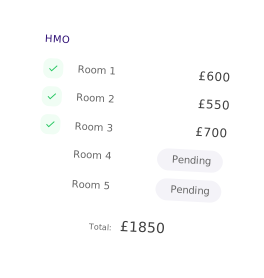
Large HMO
5 or more tenants from more than one household. A mandatory HMO licence is required.
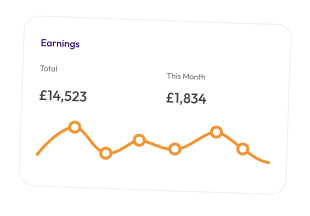
Larger HMOs
7 or more tenants. Usually needs full planning permission.
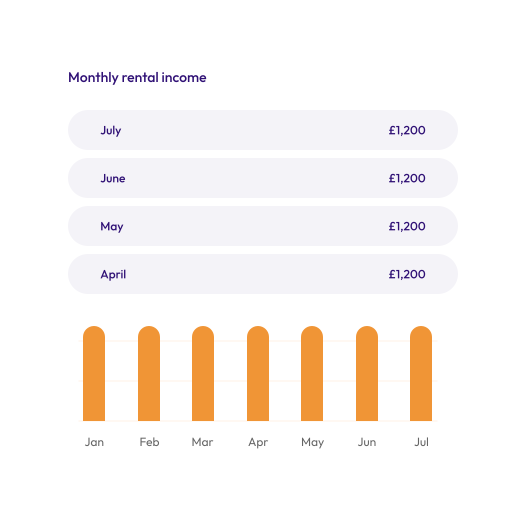
Why invest in HMO property?
HMOs can earn more from a single property than a standard let, if they're set up and run well.
-
Higher rent per property
Letting by the room usually brings in more total rent than letting the whole house to one household.
-
Spread risk across rooms
One empty room doesn't mean the whole property earns nothing.
-
Strong room demand
Young professionals, key workers and students often look for room lets in towns and cities.
-
Value-add potential
Converting a family house to an HMO can add value, where planning and licensing allow it.


What to check before investing in an HMO
HMOs can earn more, but they cost more to set up and run. The numbers have to work after every cost, not just on gross rent.
-
Set-up costs
Fire doors, alarms, extra bathrooms and furnishing can add significantly to the purchase price.
-
Running costs
Bills are usually included in the rent, plus cleaning, maintenance and higher insurance.
-
Management time
More tenants means more turnover, more viewings and more day-to-day issues.
-
Licensing
Fees and conditions vary by council, and licences must be renewed.
-
Planning
Article 4 directions in some areas mean you need planning permission to convert a house to a small HMO.
-
Finance
HMO mortgages are a specialist product with their own lending criteria.
Do you need an HMO licence?
In England, a mandatory HMO licence is needed when five or more people from more than one household live in the property. Many councils also run additional licensing schemes that cover smaller HMOs, including some with three or four tenants. Always check with the local council before you buy.
-
 Who issues HMO licences?
Your local council. Each council sets its own fees and conditions.
-
 How long does a licence last?
Usually up to five years, after which it must be renewed.
-
 What happens if you don't have one?
Councils can issue fines, and landlords can be ordered to repay rent.

How does the Renters' Rights Act affect HMOs?
The Renters’ Rights Act applies to HMOs just as it does to other private lets. Since 1 May 2026, tenancies are periodic, Section 21 evictions have ended and rent can only rise once a year. There’s a specific possession ground for student HMOs, and landlords will need to register on the new PRS Database as it rolls out from December 2026.
Two ways to build a business around HMOs
Four ways Sourced Partners build property income
-
Source HMO deals for investors
Find suitable properties, run the numbers and present them to investors for an agreed fee. You don't need to buy the property yourself. Sourcing businesses must meet compliance requirements such as anti-money laundering supervision and redress scheme membership.
-
Build your own HMO portfolio
Buy, convert and let HMOs yourself. This route needs your own capital, finance and a clear plan for licensing and management.


How Sourced Partners build HMO deals
When you become a Sourced Property Partner, you are not left with a folder of course notes and a list of things to figure out alone. You get:
-
Practical training
Learn how to find, assess and present HMO opportunities.
-
Deal Analysts
Get the numbers checked, including set-up costs, running costs and realistic room rents.
-
Personal Business Manager
One-to-one support to keep your business moving.
-
Investor network
Present suitable HMO deals to investors through the Sourced app and platform.
-
In-house brokerage
Support with specialist HMO finance, subject to lender criteria.
-
Property accounting
Accounting built in, so you don't need an external accountant.
Real Partners.
Real HMO projects.
- No property experience when they joined Sourced
- Bought a two-bedroom terraced house for £140,000
- Converted it into a six-bedroom HMO over six months, with a £200,000 refurbishment
- Commercial valuation of £466,000 after the works
- Projected rental income of £46,800 a year, around £3,900 a month

Ready to build a business around HMOs?
Book a discovery call-
Book a discovery call
Tell us what you want to build, whether that's sourcing HMO deals for investors or growing your own portfolio.
-
Get to know us
See how the training, Deal Analysts and investor network work, and speak to Partners already doing it.
-
Secure your franchise
If it's the right fit, we'll onboard you and help you start working on your first HMO opportunities.
Frequently asked questions
-
A property let to three or more tenants who form more than one household and share facilities such as a kitchen or bathroom.
-
Not always. A mandatory licence applies to five or more tenants from more than one household. Some councils also require a licence for smaller HMOs through additional licensing schemes, so check with the local council. Read our full guide to HMO licences for 3 tenants.
-
Fees are set by each council and vary widely. Check the council’s website for its current fees before you buy.
-
It can be, if the numbers work after all costs and the property meets licensing and planning rules. HMOs usually bring in more rent than a single let, but they cost more to set up and take more time to manage.
-
In many areas, converting a house to a small HMO doesn’t need planning permission. Where an Article 4 direction applies, it does. HMOs with seven or more tenants usually need full planning permission.
-
Yes. You can source HMO deals for investors and earn a fee, or manage HMOs for landlords. Sourced Partners are trained to find and present HMO deals to investors.
-
No. Sourced’s in-house brokerage can help Partners and their investors access specialist HMO finance, subject to lender criteria. The property purchase is funded separately.