Available Properties
 Find an Agent
 Bespoke property sourcing
 Investment App
 Sourced Financial Services
 Get a quote
 Blogs
 Podcast
 Guides
 Webinars
 Investment Strategies
 Choose Your Franchise
 Property Franchise
 Living Franchise
What is an HMO? Meaning, rules and types explained
What HMO means, what counts as a house in multiple occupation, the different types, and the licensing and safety rules landlords must follow.
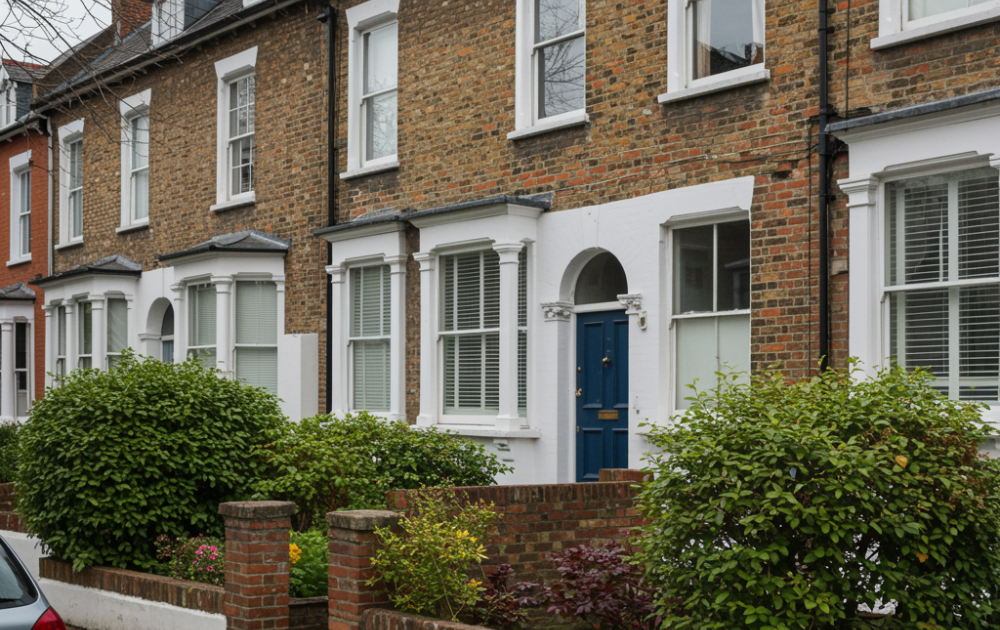
HMO stands for house in multiple occupation. In the UK, a property is an HMO if at least 3 tenants live there, forming more than one household, and they share a kitchen, bathroom or toilet. A typical example is a shared house where each tenant rents their own room. HMOs have extra safety rules, and many need a licence from the local council.
Here’s what counts as an HMO, the different types, the rules landlords must follow, and why HMOs are popular with property investors.
Key takeaways
- HMO means house in multiple occupation: 3 or more tenants, from 2 or more households, sharing facilities.
- HMOs with 5 or more tenants need a mandatory licence. Many councils license smaller HMOs too.
- HMOs must meet extra fire safety, room size and management rules.
- Investors like HMOs because several room rents usually add up to more than a single let.
What does HMO mean?
HMO stands for house in multiple occupation. The definition comes from the Housing Act 2004. A property is an HMO if:
- At least 3 tenants live there
- They form more than 1 household
- They share a toilet, bathroom or kitchen
- It’s their main home, and they pay rent
A household is a single person, or members of the same family living together, including couples. So a couple and a friend sharing a house is 2 households and an HMO. A family of 4 renting a house is 1 household, so it isn’t.
What is a large HMO?
A large HMO is one with 5 or more tenants from 2 or more households, sharing facilities. In England, every large HMO needs a mandatory licence from the council.
Types of HMO
- Shared houses: tenants rent individual rooms and share the kitchen and bathroom. The most common type.
- Professional HMOs: aimed at working professionals, often with en-suite rooms and higher rents.
- Student HMOs: let to students, usually on yearly tenancies near universities.
- Bedsits: rooms with their own cooking facilities but shared bathrooms.
- Co-living: larger, managed HMOs with high-quality shared spaces.
- Section 257 HMOs: buildings converted into self-contained flats that don’t meet 1991 building regulations, where less than two-thirds of the flats are owner-occupied.
Do HMOs need a licence?
It depends on the size and the area:
- Mandatory licensing: required across England for HMOs with 5 or more people.
- Additional licensing: many councils also license smaller HMOs, including those with 3 or 4 tenants.
- Selective licensing: some councils license all rented homes in certain areas.
Read our guide on whether you need an HMO licence for 3 tenants, or our full guide to HMO licences.
Do HMOs need planning permission?
Turning a family home into a small HMO for 3 to 6 people (planning use class C4) is usually allowed without planning permission. Larger HMOs for 7 or more people need planning permission. Many councils also use Article 4 directions to require permission for small HMOs in certain areas, so always check with the council first.
HMO rules landlords must follow
- Fire safety: smoke alarms, fire doors and safe escape routes, depending on the property
- Room sizes: bedrooms must be at least 6.51 square metres for one adult and 10.22 square metres for two adults
- Gas safety: an annual gas safety check
- Electrical safety: an electrical inspection at least every 5 years
- Shared facilities: enough kitchens, bathrooms and toilets for the number of tenants
- Management: shared areas kept clean and in good repair, and the manager’s contact details displayed
Looking for something with less day-to-day management? Some investors choose supported living investment, where a housing provider leases the property on a long lease.
Why do investors buy HMOs?
Benefits
- Several room rents usually add up to more than letting the whole property to one household
- One empty room doesn’t stop all the income
- Strong demand from professionals, students and people priced out of renting a whole home
Drawbacks
- More management, with more tenants and more turnover
- Higher running costs, such as bills, cleaning and furnishing
- Licensing, planning and safety rules that vary by area
Read more about the operating costs of an HMO.
Frequently asked questions
What does HMO stand for?
House in multiple occupation. It’s a property shared by 3 or more tenants from more than one household.
Is my house an HMO?
It is if 3 or more tenants live there, they form more than one household, and they share facilities such as a kitchen or bathroom.
Does a couple count as one household?
Yes. A couple living together counts as one household, whether or not they’re married.
How many people make an HMO?
At least 3 tenants from more than one household. A large HMO, which needs a mandatory licence, has 5 or more.
Can you have pets in an HMO?
Under the Renters’ Rights Act, landlords can’t unreasonably refuse a tenant’s request to keep a pet. Read our guide to pet-friendly HMOs and the law.
Build a business around HMOs
Learn how to find, assess and source HMO deals for investors with the training and support of Sourced.