Available Properties
 Find an Agent
 Bespoke property sourcing
 Investment App
 Sourced Financial Services
 Get a quote
 Blogs
 Podcast
 Guides
 Webinars
 Investment Strategies
 Choose Your Franchise
 Property Franchise
 Living Franchise
How to become a property deal sourcer in the UK
A step-by-step guide to becoming a property deal sourcer, from compliance to finding deals and investors.

To become a property deal sourcer in the UK, you need to learn how to find and analyse property deals, register for anti-money laundering supervision with HMRC, join a property redress scheme, register with the ICO, and build a list of investors to introduce deals to. You don’t need formal qualifications or the money to buy property yourself. You earn a sourcing fee from the investor when a deal completes.
This guide covers what a deal sourcer does, the steps to get started, how much you can earn, and how to build it into a successful business.
Key takeaways
- Deal sourcers find property deals and introduce them to investors for a fee.
- You don’t need to own property or have capital to start.
- You must be compliant before you take a fee: HMRC AML supervision, a redress scheme and ICO registration.
- Success comes from good deals, honest numbers and a strong investor network.
How do I start a deal sourcing business in the UK?
- Set up your business, usually as a limited company, with a business bank account.
- Register with HMRC for anti-money laundering supervision. Property sourcers must be supervised before they trade.
- Join a property redress scheme, such as The Property Ombudsman or the Property Redress Scheme.
- Take out professional indemnity insurance and register with the ICO for data protection.
- Learn to find and analyse deals, such as off-market and below market value properties.
- Build an investor list, and use a written sourcing agreement with each investor before sharing deals.
- Package your first deal with the numbers checked, and agree your sourcing fee in writing.
What does a property deal sourcer do?
A property deal sourcer, also called a property sourcer, finds property deals that suit investors and introduces them for a fee. A typical day might include:
- Marketing to find motivated sellers
- Building relationships with estate agents
- Viewing properties and checking comparable sold prices
- Analysing deals: costs, rent, yield and return
- Putting together deal packs for investors
- Supporting the investor through to completion
Investors use sourcers because finding good deals takes time and local knowledge they often don’t have.
How to become a deal sourcer: step by step
Step 1: Learn the fundamentals
Understand property strategies, how to value a property and how to analyse a deal. You need to be confident with yield, return on capital and the true costs of buying. Our guide to ROI, ROCE and yield is a good place to start.
Step 2: Get compliant
Before you charge a fee, you must:
- Register with HMRC for anti-money laundering supervision
- Join a property redress scheme, such as The Property Ombudsman or the Property Redress Scheme
- Register with the ICO, because you’ll handle personal data
- Get professional indemnity and public liability insurance
- Use a written sourcing agreement with every investor
Sourcing without these is illegal, and serious investors will check.
Step 3: Find the investor first
The most successful sourcers don’t find a property and then hunt for a buyer. They find out what investors want, then source deals to match. Before you look for deals, know each investor’s:
- Areas they’ll buy in
- Strategy, such as buy to let, HMO or flip
- Budget and how they’re funding it
- Target return
- Timescale
- Property types they won’t consider
Read our guide on how to find property investors in the UK.
Step 4: Choose your area and strategy
Pick an area you can get to know well, and a strategy investors want there. Popular strategies include below market value property, buy to let, HMOs and serviced accommodation. Focusing makes you the local expert.
Step 5: Find deals
The main ways to find deals are:
- Estate agents: be specific about your criteria and areas so they think of you first.
- Motivated sellers: landlords leaving the market, inherited properties and sales that have fallen through. Always approach sellers ethically.
- Property portals: look for price reductions, long listings and repeated relistings on Rightmove, Zoopla and OnTheMarket.
- Auctions
- Your network: landlords, letting agents, solicitors, accountants and mortgage brokers.
Our guide on how to get a BMV property covers each one.
Step 6: Analyse every deal properly
A cheap property isn’t automatically a deal. There needs to be a clear reason an investor would want it, such as a motivated seller, room to add value or a strong yield. Your job is to prove why the opportunity works.
Check sold prices, refurbishment costs, rent, running costs and the return. Don’t forget stamp duty and finance costs. Only send deals you’d be confident defending. One bad deal can cost you an investor.
Step 7: Package the deal
A good deal pack includes:
- Purchase price and condition
- Comparable sold prices and the expected end value
- Refurbishment costs
- Rent evidence and yield
- Finance assumptions
- Risks and exit options
- Your fee
Be open about the risks. Investors trust sourcers who show them the downsides as well as the upside.
Step 8: Agree your fee and support the deal to completion
Agree your fee in writing before you share the full details. Sourced Partners use a sourcing agreement where the fee is collected upfront and held in a client account until exchange of contracts. Stay involved until completion, keep everyone updated and solve problems quickly.
How much do property deal sourcers earn?
Sourcing fees vary with the deal and how much work goes into it. Fees of £4,000 to £10,000 per deal are typical. Earnings depend on how many deals you complete, and it isn’t quick or easy money: it takes consistent work to build.
Some Sourced Partners’ results:
- Michael made £40,000 in 3 months
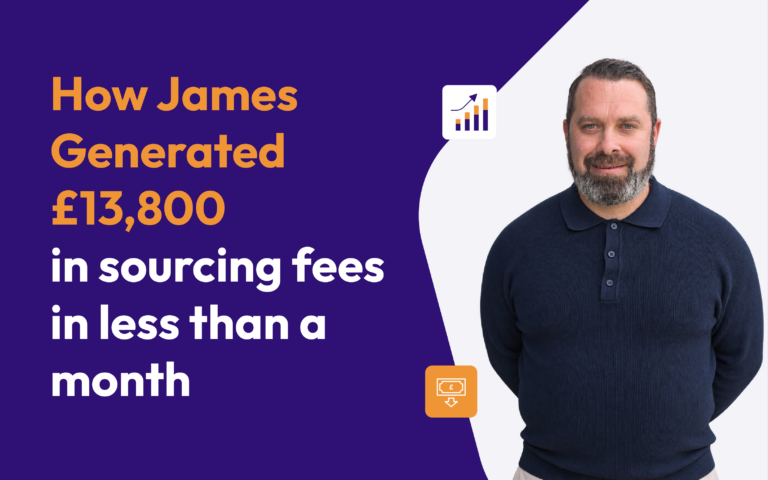
- James generated £13,800 in sourcing fees in less than a month
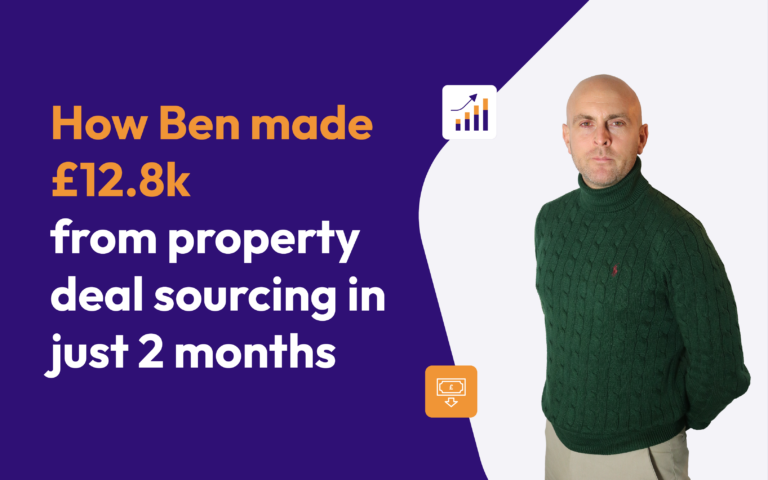
- Ben made £12,800 in 2 months
These are individual results, not typical earnings. Results depend on your effort, area and market.
What makes a successful deal sourcer?
- Honesty: realistic numbers and no inflated valuations
- Consistency: marketing every week, not just when you need a deal
- Local knowledge: knowing your area’s prices, rents and demand
- Relationships: with agents, sellers and investors
- Due diligence: checking every deal before it goes out. Read more about due diligence in property sourcing
Common mistakes new sourcers make
- Taking fees before they’re compliant
- Sending deals with overstated discounts or returns
- Trying to cover too many areas or strategies at once
- Not having enough investors when a good deal comes up
- Giving up before the marketing has had time to work
Can you deal source part time?
Yes. Many sourcers start alongside a job and go full time once deals are coming through consistently. Our guide to sourcing property part time covers how.
Becoming a deal sourcer with Sourced
Starting alone means building everything from scratch: training, systems, compliance and investors. Sourced Property Partners get:
- A 4-week deal sourcing course, followed by ongoing support
- Escudo, Sourced’s in-house tool for finding deals, plus a CRM
- Access to investors through the Sourced Deal Search platform and app
- Deal Analysts who check the numbers before deals go out
- Help setting up AML, compliance and sourcing agreements
As Partners gain experience, many go on to flips, HMOs and developments.
Frequently asked questions
Do I need qualifications to become a deal sourcer?
No formal qualifications are needed. You do need to be compliant, with HMRC AML supervision, a redress scheme and ICO registration, and you need to know how to analyse a deal.
Is property deal sourcing legal in the UK?
Yes, as long as you’re properly registered and use written agreements with investors.
How much do deal sourcers charge?
It varies with the deal, but fees of £4,000 to £10,000 per deal are typical.
Do I need investors before I start sourcing deals?
It helps. Knowing what your investors want means you can source deals to match, rather than finding a deal and then looking for a buyer.
What makes a good property deal?
A clear reason an investor would want it, such as a genuine discount, room to add value or a strong yield, backed by evidence like comparable sold prices.
Do I need money to start deal sourcing?
You don’t need money to buy property, but you’ll need a budget for compliance, insurance, marketing and training.
How long does it take to get your first deal?
It varies. Some people complete a deal in their first few months. Consistent marketing and a ready investor list make the biggest difference.
Build a deal sourcing business
Get the training, tools, compliance support and investor network to become a successful property deal sourcer.